Intro to Fashion Design and Merchandising - FCS208
Winter 2026
Course Information
This course is an introduction to the fashion industry. This includes learning about fashion history, designers, and movements, as well as principles and elements of design, and textile basics.
Projects
Textile Reference Guide Part 1
In weeks 3 and 4 of the semester I learned about Textile fibers and weaving, and did a Burn Test to figure out what kind of fiber a textile is made out of, and a Weaving project to learn how textiles are made. The Burn Test project can be viewed below.
I discussed the findings of my burn test with my mom. She actually helped me with photographing the fabric during the burn test, so I explained things to her during that. I explained why the man-made fabric melted, and why the natural fabric didn’t. She had a few questions about burn tests and fabric in general: Why do you need to test what kind of fabric is what? Why do we make so many things out of plastic, if it’ll just melt when exposed to fire? What material are fire-resistant pajamas made out of? Are they a special fabric, or is it just because they’re tight-fitting? I was able to explain the first one to her, that it’s mostly to figure out how to wash the fabric, but that it’s also important for garments like underwear, which needs to be mostly cotton—100% is ideal. But the last two really stumped me, because they were questions I have, too! I was also curious as to why Rayon can’t be identified by a burn test. My plan to find answers to my mom’s questions is to go to various fabric websites (like Mood Sewciety) and search for articles about synthetic fabrics specifically. Then, I can find an answer to the question regarding flame-resistant pajamas by comparing my pajamas with my sibling’s, seeing what the fiber content is on the care tag. I’m thinking most of them are either Polyester or Nylon, because on the Burn Test Chart, those two are the ones that put themselves out rather quickly, or struggle to burn.
Textile Reference Guide Part 2
The second part of the guide focused on learning about how the textile was made. The weaving assignment explored common textile weaves, like plain, satin, and twill.
Using my new knowledge, I identified different types of fabrics around my house.
Color Wheel
During our study of color, I made a color wheel and a tint/shade/tone chart, to better see how color worked within textiles and design.
Career Research
To prepare for my future career, I had to find and research a job within the fashion industry.
Design a Line
In week 12, I finally got to the design portion of the class! I made 5 different designs, for a garden inspired women’s formal wear line.
During this project, I went through many phases of sketching and refining. These are some of my original sketches.
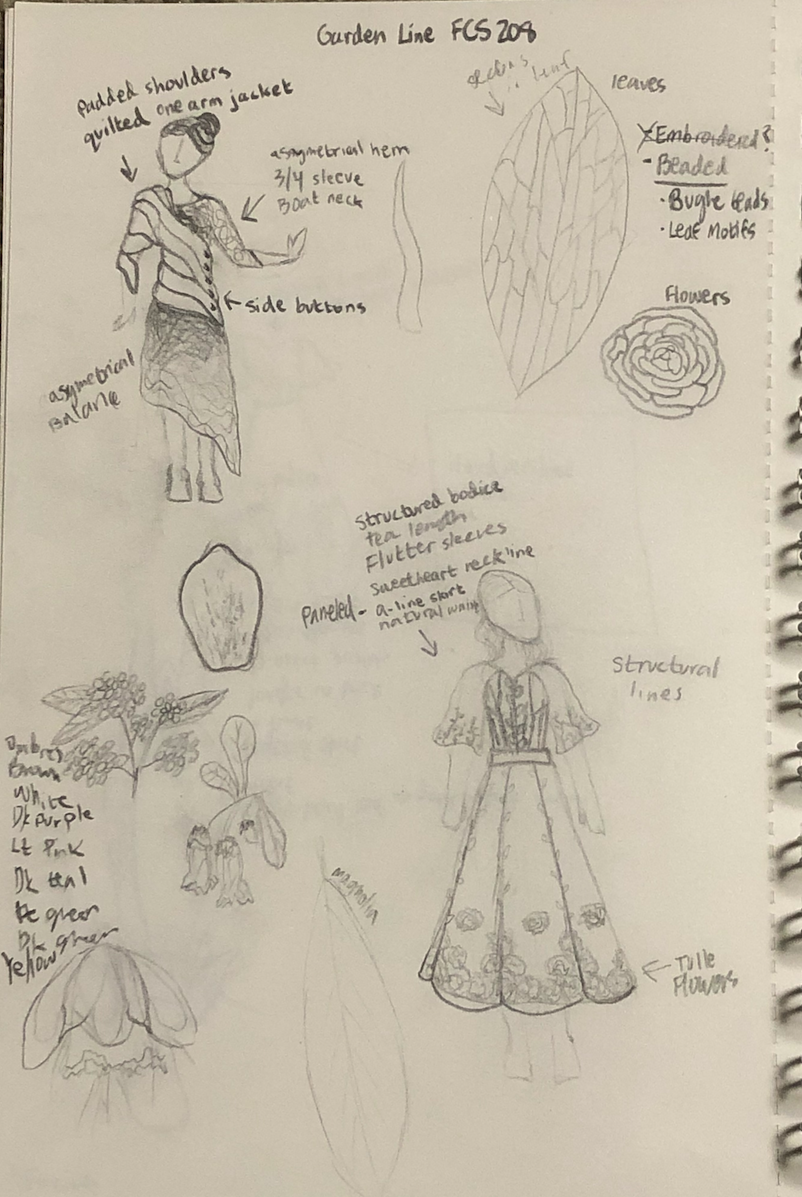
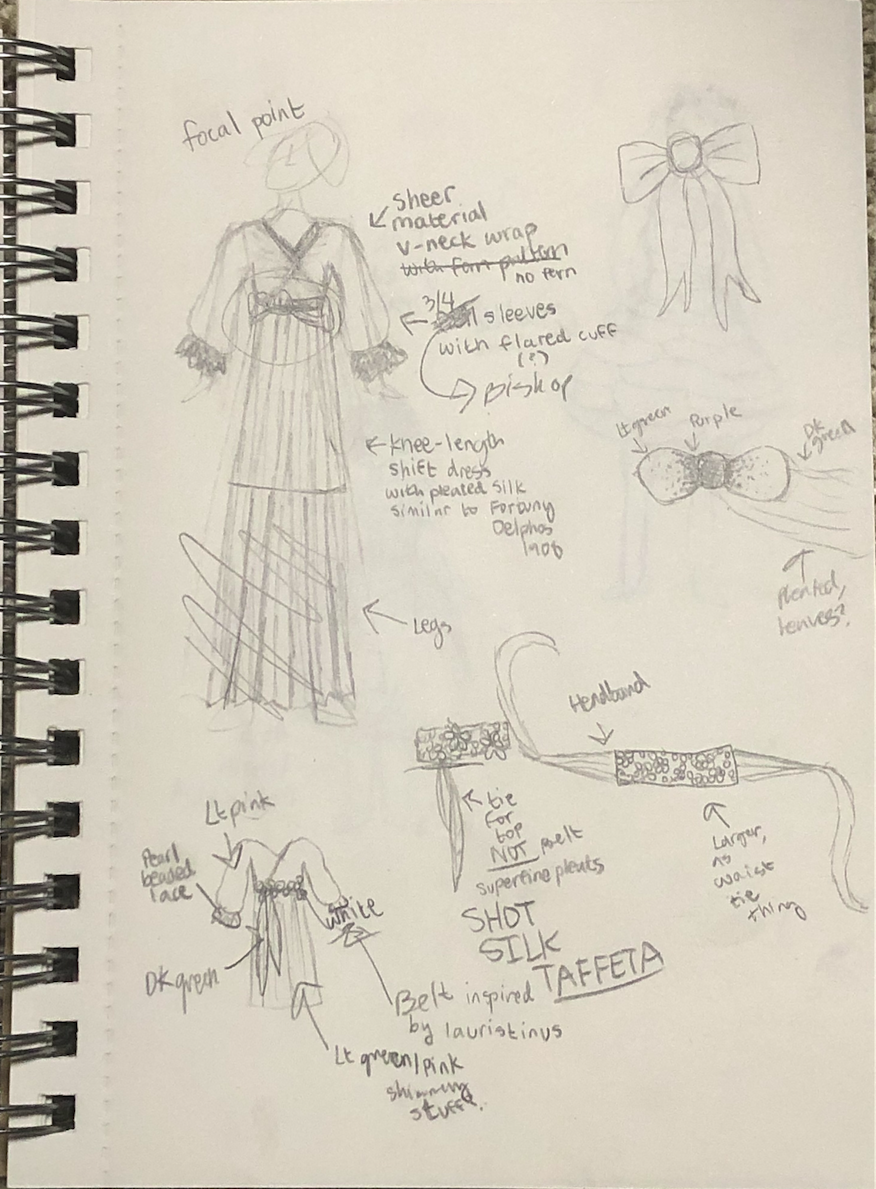
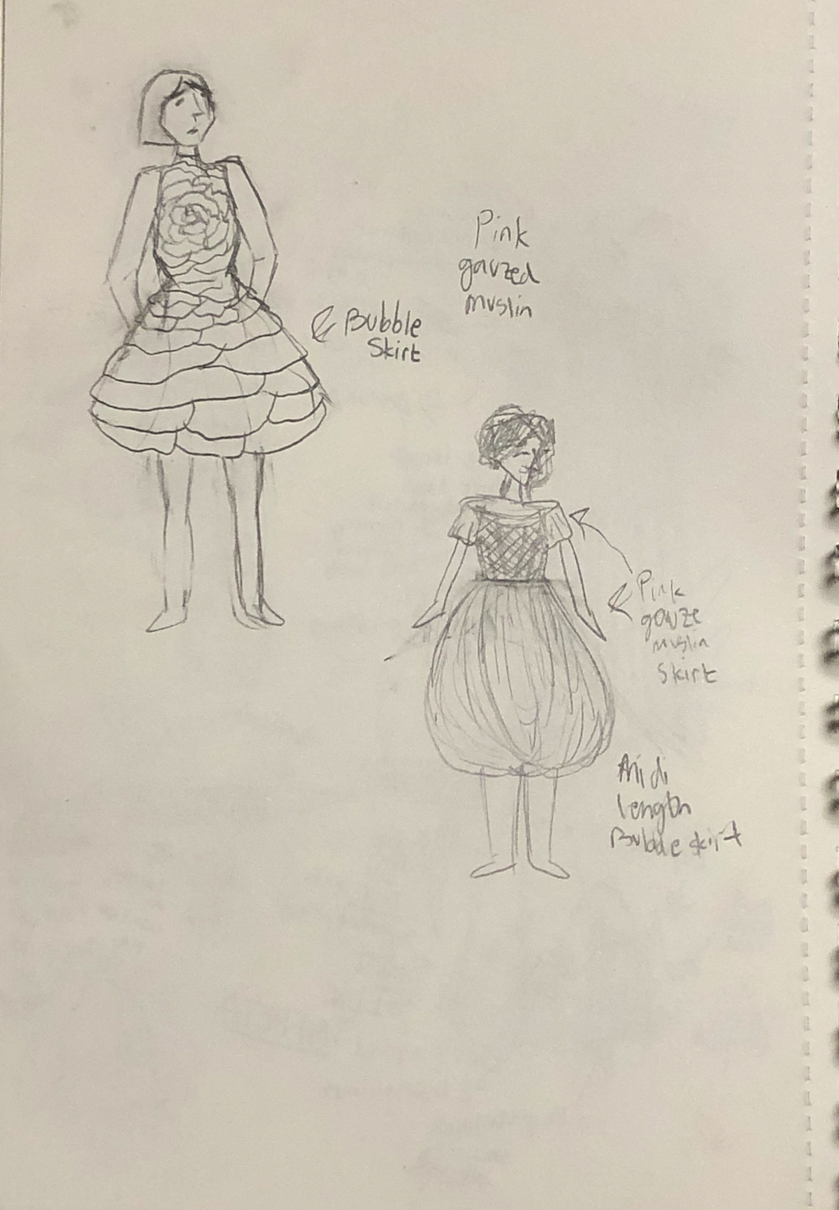
The process of design was really interesting because I chose natural inspiration. I spent a lot of time outside looking at different flowers and leaves, and you can see some of my thought process in these preliminary sketches. It’s where I wrote down different fabric options, different color options, and all the design details I wanted to include (sleeves, necklines, dress length, etc.).
Fashion Merchandising
With my newly designed line, I had to make a merchandising plan. This included the store layout, how prices were chosen, and our target customer.